Techniques / Printing
Raised Print
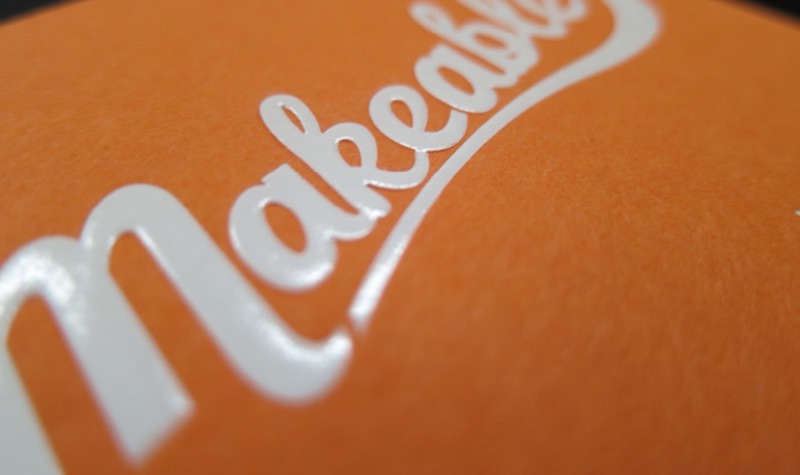
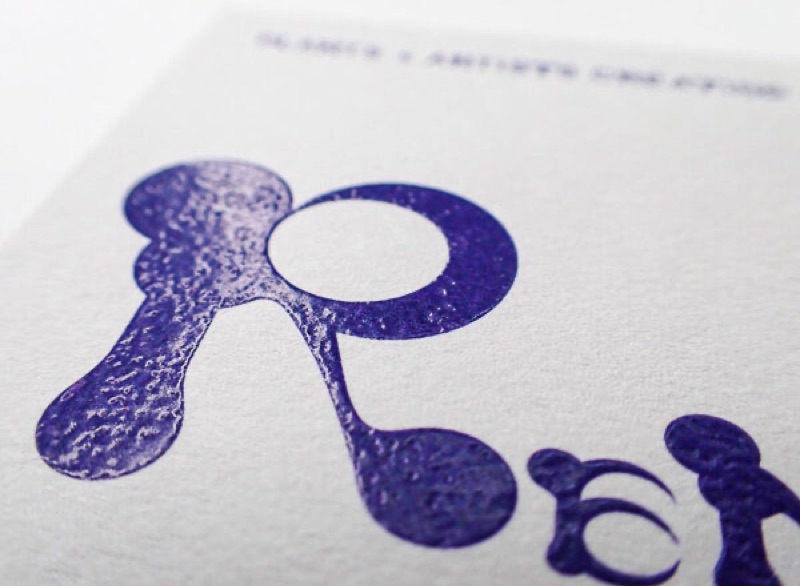
Ink you can feel. Raised print (thermography) fuses resin powder to wet ink under heat, so the printed image is raised and sits on top of the sheet: a dimensional, glossy relief without the die costs of engraving or embossing.
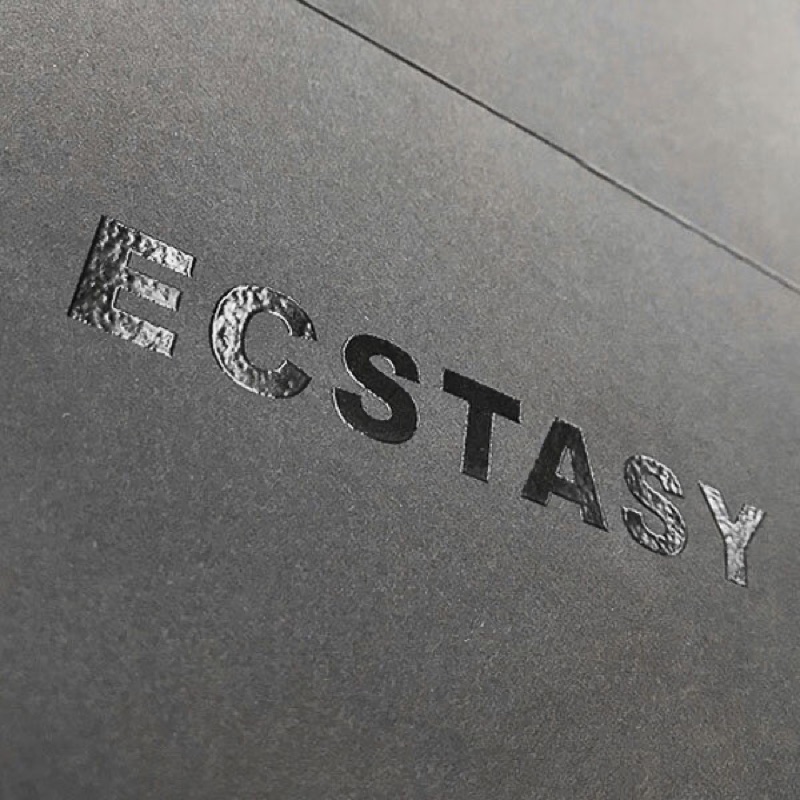
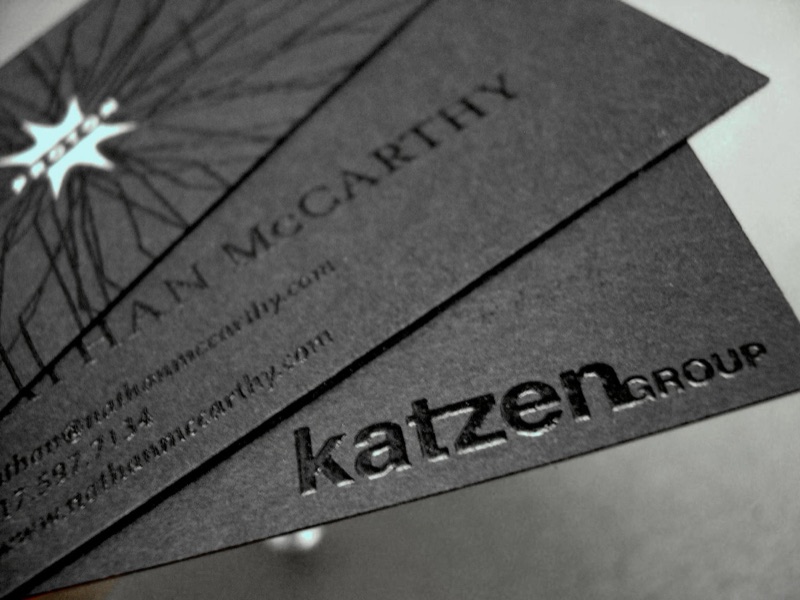
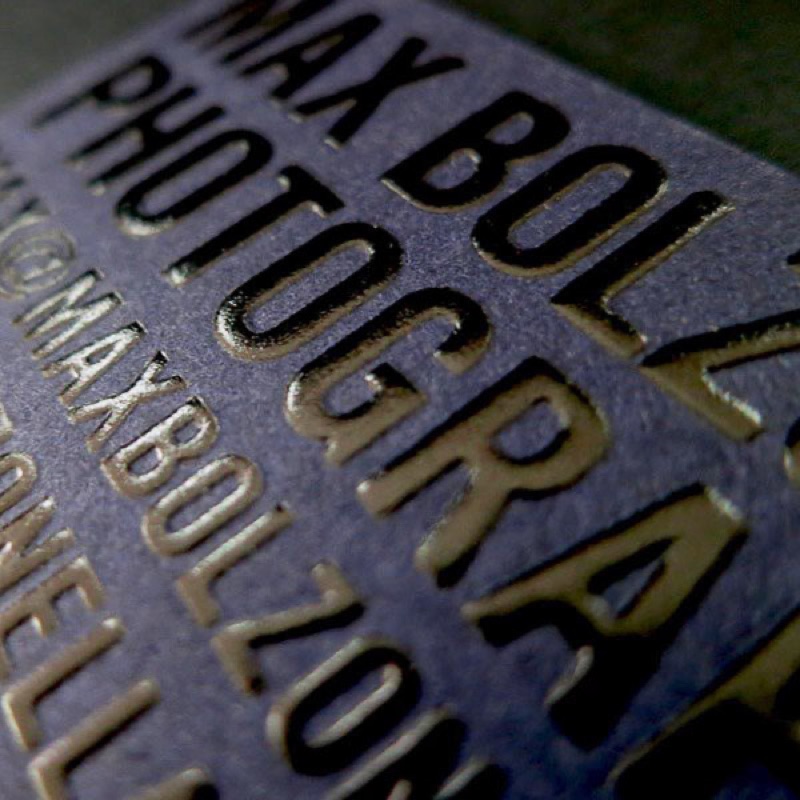
The signature move is raised black on black: glossy dimensional ink on matte black stock, a tone-on-tone effect that reads by touch and by angle. On kraft and uncoated stocks, raised ink pops against the raw texture. A favorite for business cards that need a high presence on the down low.
Where embossing sculpts the paper itself and engraving presses opaque ink into plate-formed relief, thermography builds the ridge from the ink; faster, more affordable, and distinctly glossier. It handles type and line work beautifully; fine hairlines and large solid floods are where we'll steer the design conversation for this technique.
What raised print suits
- Business cards: dimensional presence without die costs.
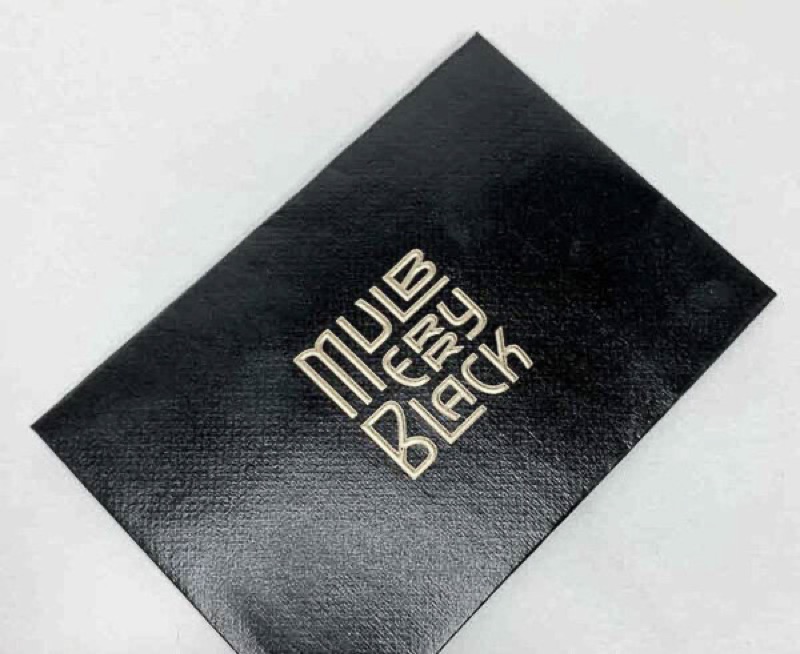
- Stationery & envelopes: raised return addresses and marks with formal feel.
- Black on black: The glossy tone-on-tone signature.
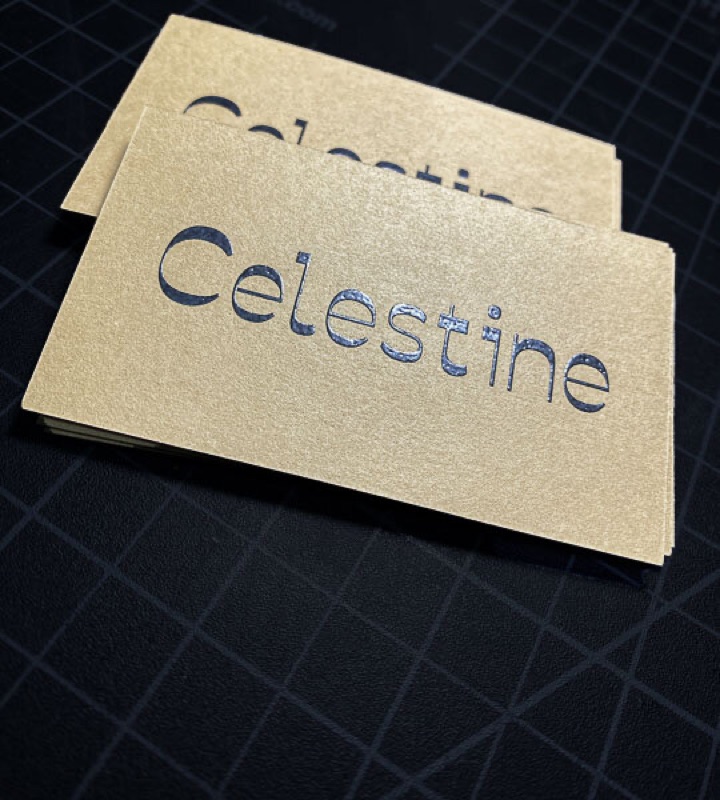
- Kraft & uncoated stocks: raised ink popping against raw texture.
Raised print samples
FAQ
What is thermography?
Raised print: resin powder fused to wet ink under heat, so the printed image swells and sits proud of the sheet, dimensional, glossy relief without dies or plates.
Raised print or engraving?
Engraving presses opaque ink into plate-formed relief: sharper, flatter, and the formal investment. Thermography builds the ridge from the ink. Faster, more affordable, distinctly glossier.
What's the black-on-black effect?
Glossy raised black ink on matte black stock: invisible head-on, unmistakable at an angle and under a thumb. A house signature.
Any design limits?
Type and line work raise beautifully; fine hairlines and large solid floods are where we'll steer the design conversation.