Techniques / Printing
Engraving
After centuries of innovation in print, engraving remains the highest form of putting ink to paper. Your design is etched into a copper or steel plate which is then coated with a thick pigment-rich ink. The plate is wiped clean, leaving ink only in the engraved recesses. When the plate is pressed onto the paper, the ink is transferred — creating a distinct, tactile, permanently raised impression of the design.
Why engraving wears the crown
- Textural discourse: not flat print but 3D ink that begs to be touched, raised with fingertip precision.
- Sharpness personified: engraving holds the sharpest, thinnest lines of any process. HD, for paper.
- Hard in the paint: Color saturation and richness unparalleled on paper; engraving ink is completely opaque.
- Exclusivity: once you carry an engraved card, you find out who else knows.
Where it belongs
Used historically for fine art prints and book illustrations, it is used today for luxury stationery, wedding invitations, business cards, and official documents where fine detail is desired. We recommend the thickest 100% cotton papers from storied American and European mills. Because the ink is opaque, **metallic and white inks on black paper** are perfect for the most exquisite black-tie work, and we can source luxe stock in almost any color.
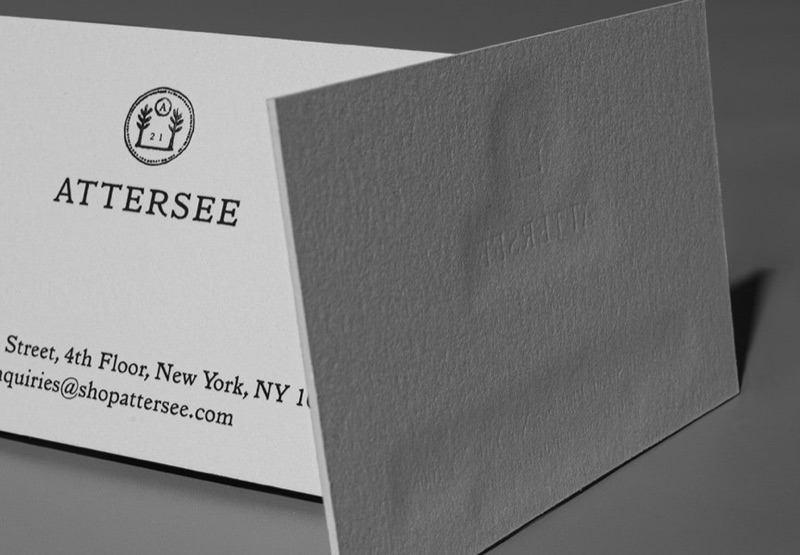
The proof is on the back of the sheet: genuine engraving leaves a faint bruise where the paper was forced into the plate: the fingerprint of intense pressure. Run a thumb across the front and the ink stands in relief so sharp it practically clicks.
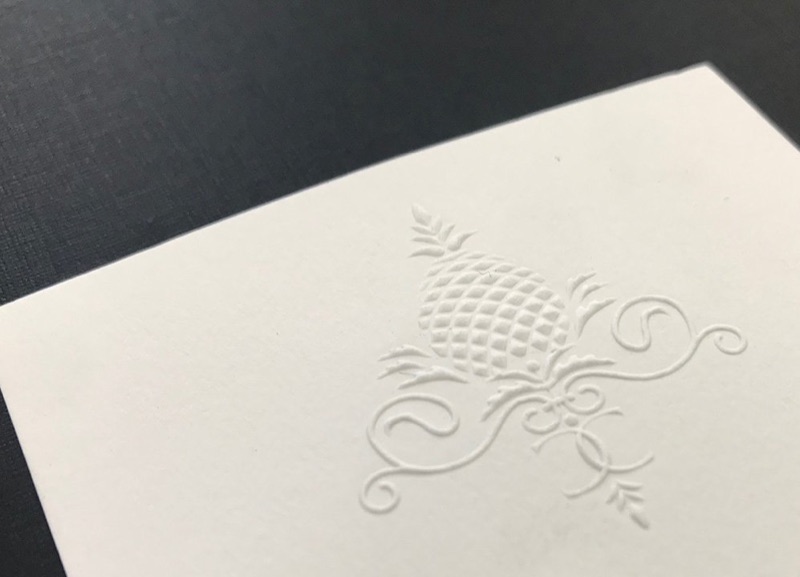
Versus its siblings: embossing sculpts the paper with no ink, thermography builds a glossy ridge from resin, and engraving presses opaque ink into plate-formed relief. Engraving is the most precise and formal of the three.
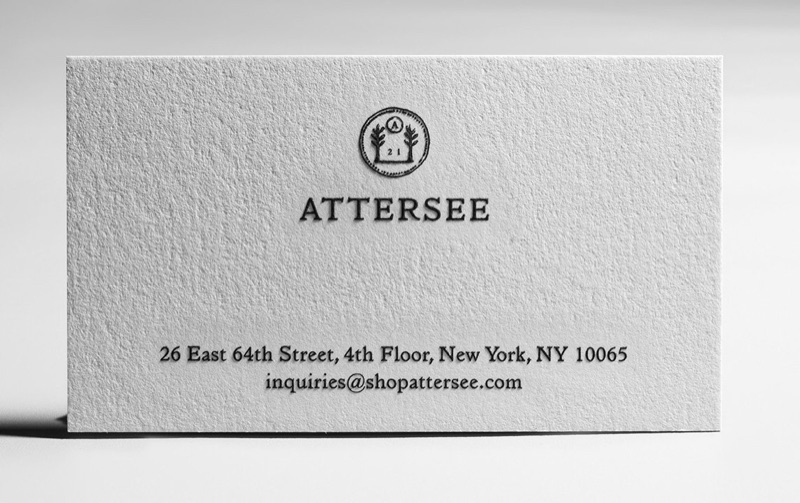
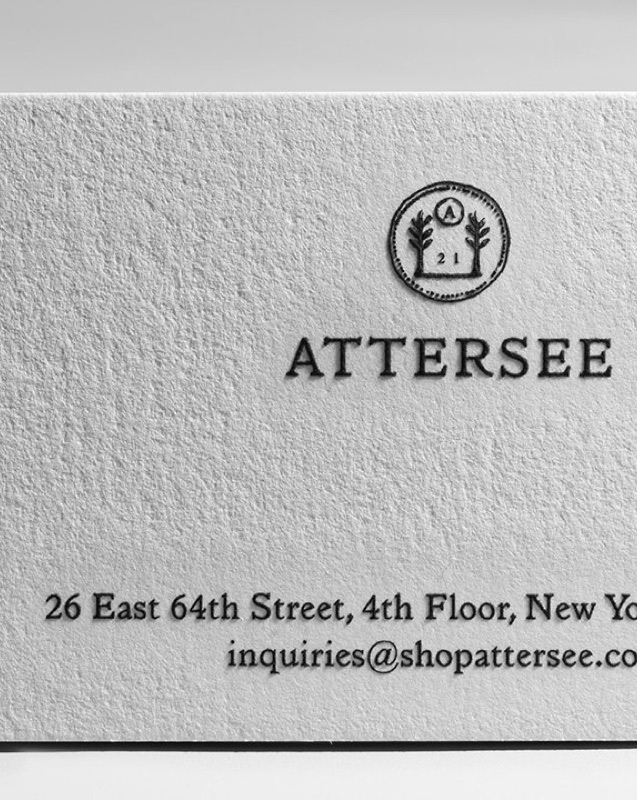
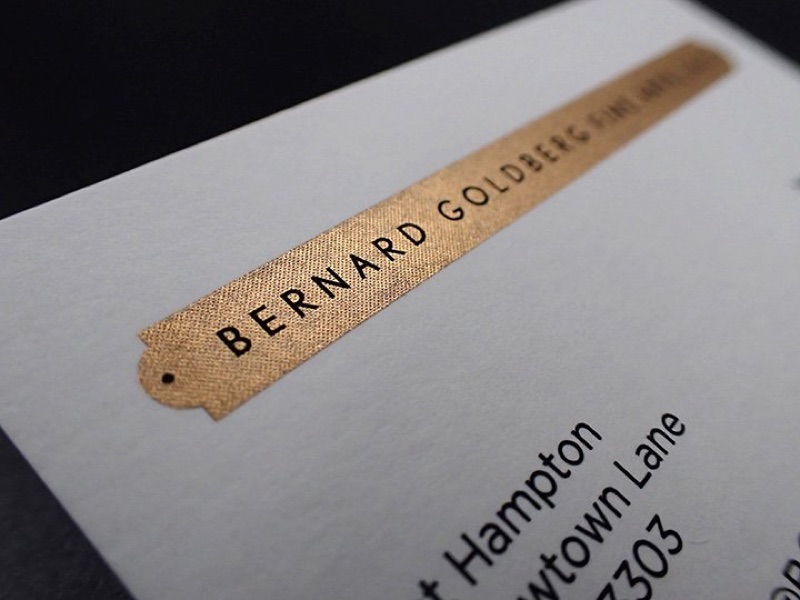
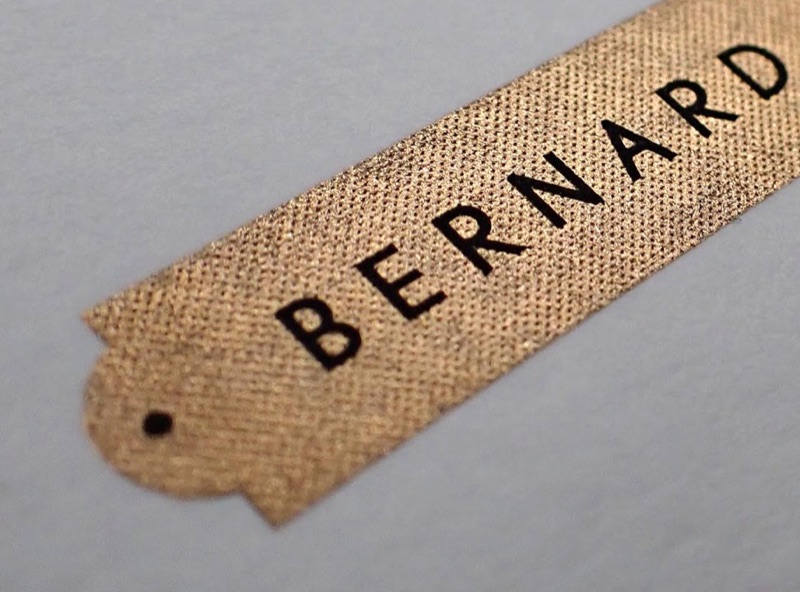
Engraving samples
FAQ
What separates engraving from thermography?
Thermography builds its ridge from resin fused to wet ink: engraving presses opaque ink into plate-formed relief. Engraving is sharper, flatter-backed on close inspection, and the formal one.
How do you spot real engraving?
Turn the card over: a faint bruise on the reverse is the fingerprint of the plate. The front holds the sharpest, thinnest lines of any process.
What papers suit engraving?
The thickest 100% cotton sheets from storied American and European mills, and because engraving ink is fully opaque, black and deep-colored stocks print beautifully in white and metallics.
Is engraving only for big runs?
No; short runs are normal. Plate-making is the investment; we'll tell you honestly when engraving is the right spend versus letterpress.