Techniques / Finishing
Gilded Edges
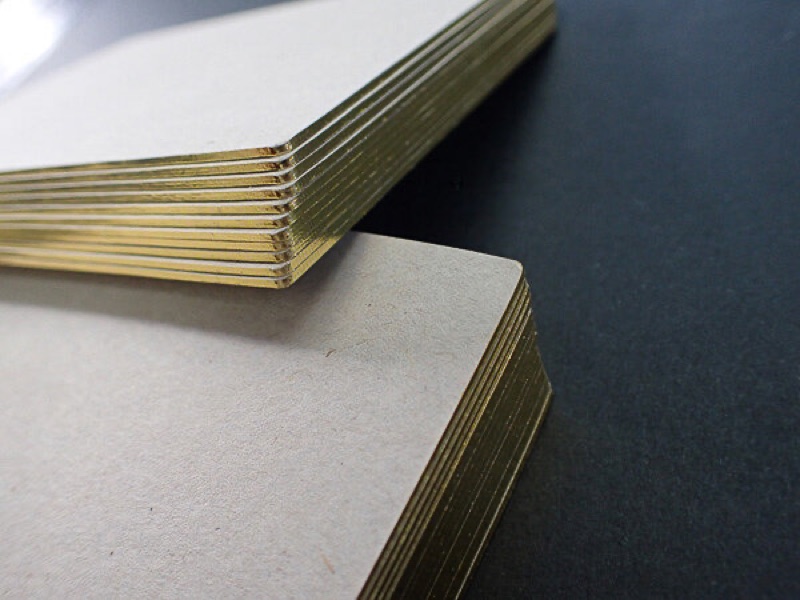
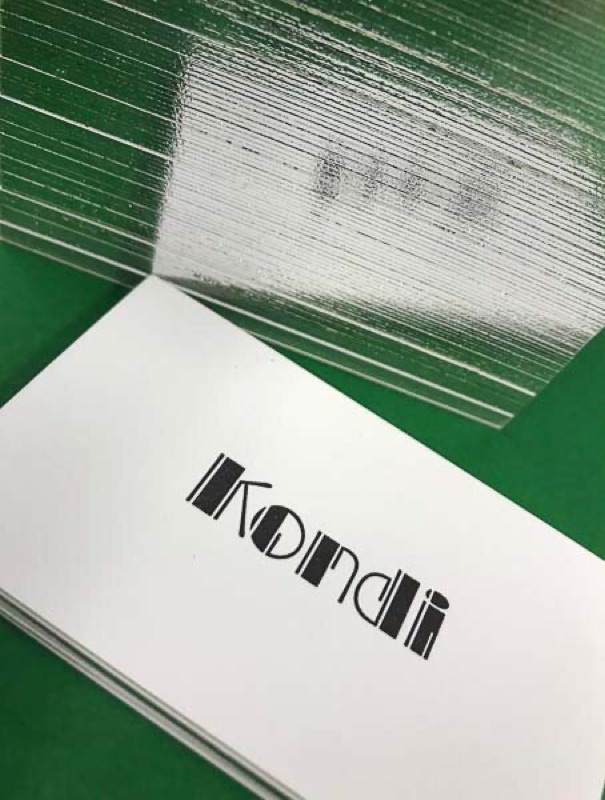
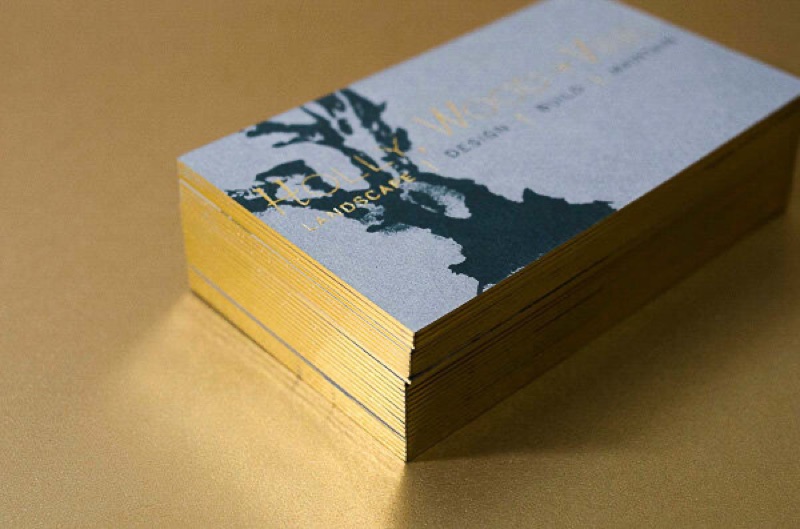
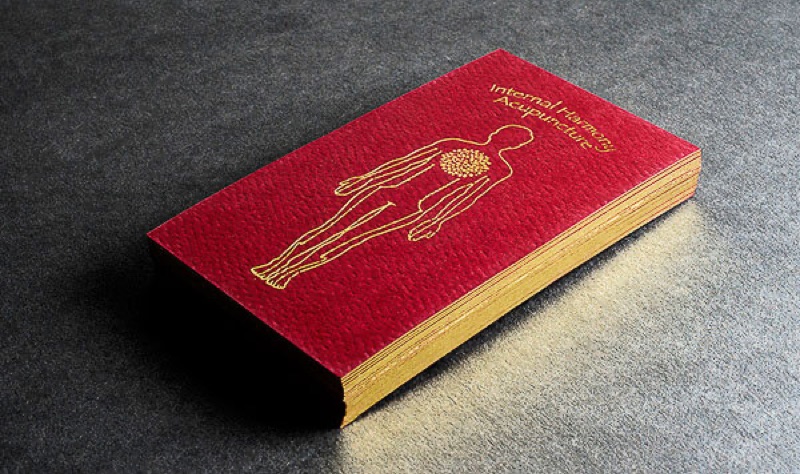
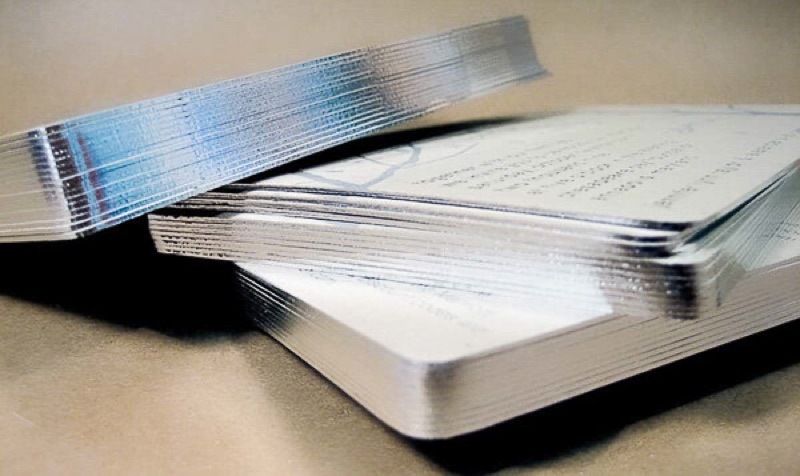
Edge gilding gives your printed piece the Midas touch: metallic foil applied to the trimmed edges of the stack, creating a captivating mirror surface that flashes every time the card is handled.
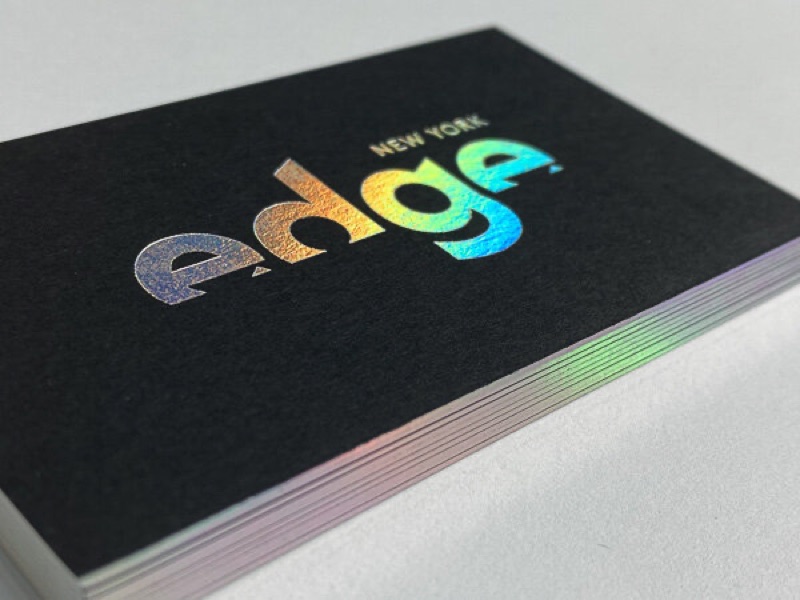
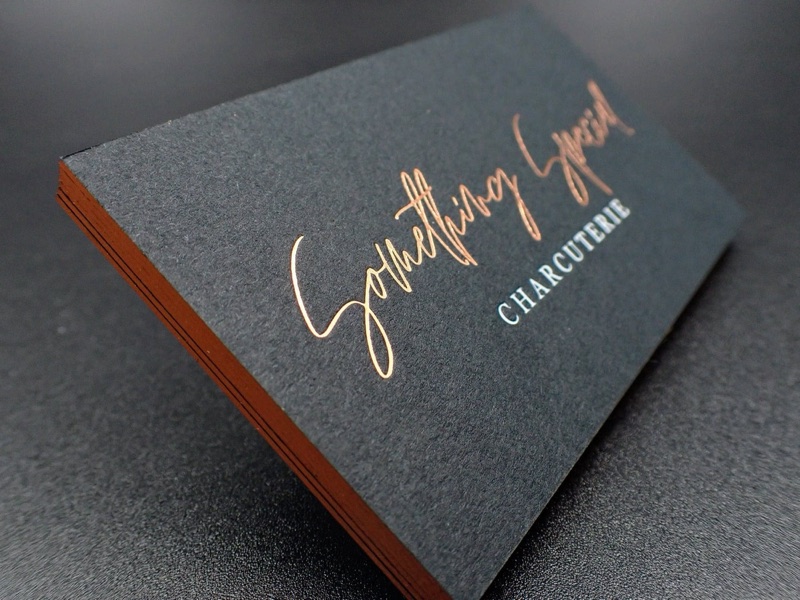
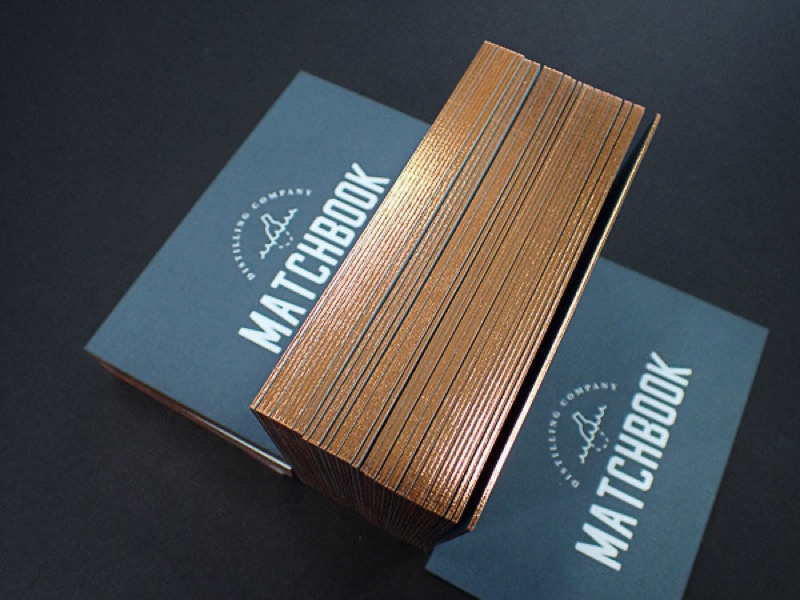
Classic gold and silver are just the start; our range runs through copper, gunmetal, and holographic hues that can complement or deliberately collide with the face design. A black card with a holographic gilded edge is one of the most-photographed items we make.
Where edge painting applies pigment for a matte band of color, gilding applies foil for reflective shine. Both want thick stock (2-ply and up) where the edge reads as an additional surface. The precision of the process guarantees a top-tier finish that enriches the feel of premium business cards, invitations, and stationery.
What gilding needs
Thickness. Here, the edge is the canvas, so the technique requires a minimum 2-ply stock, the thicker the card, the wider the mirror. Execution is artisanal: cards are trimmed, clamped, and gilded in stacks, which ensures uniformity across the run.
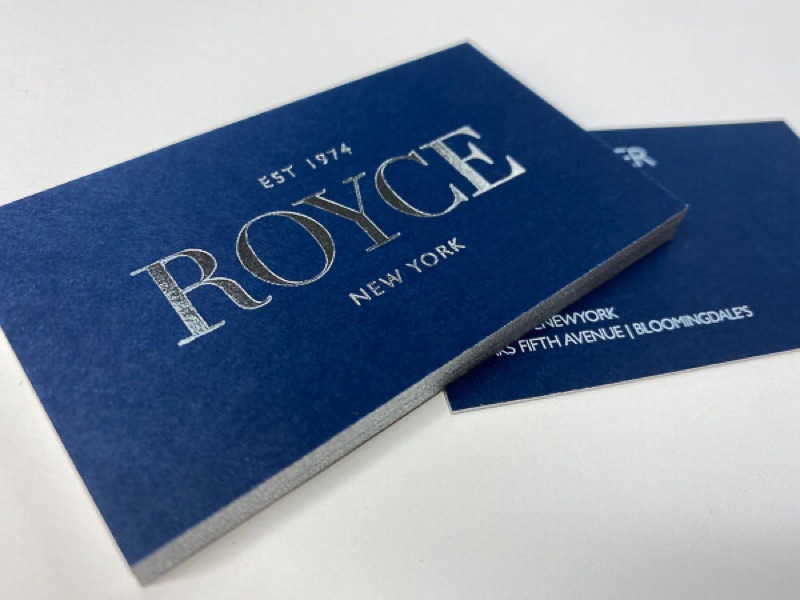
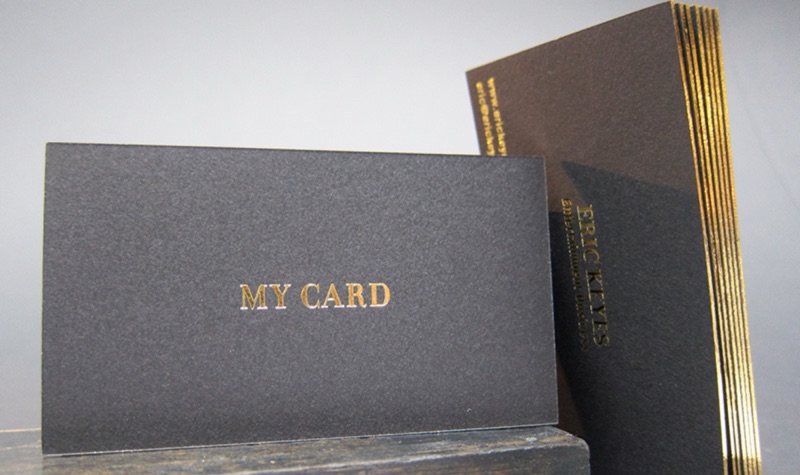
Gilded edge samples
FAQ
Gilded edges or painted edges?
Gilding applies foil for reflective mirror shine; edge painting applies pigment for a matte band of color. Both want thick stock: the choice is shine versus hue.
How thick does the card need to be?
2-ply and up is where the edge becomes a real surface. On 3-ply and duplexed builds the gilding reads from across the table.
What colors are available?
Gold, silver, copper, gunmetal, and holographic. Matched to the face design or deliberately colliding with it.
Does the gilding wear off?
It's foil bonded under heat and pressure to the trimmed stack: it lives with the card, handling included.