Techniques / Printing
Clear Foil
The transformative technique almost nobody asks for by name, because they haven't seen it yet. Clear foil transfers a transparent layer onto the sheet, creating accents that appear and disappear as the piece moves in the light.
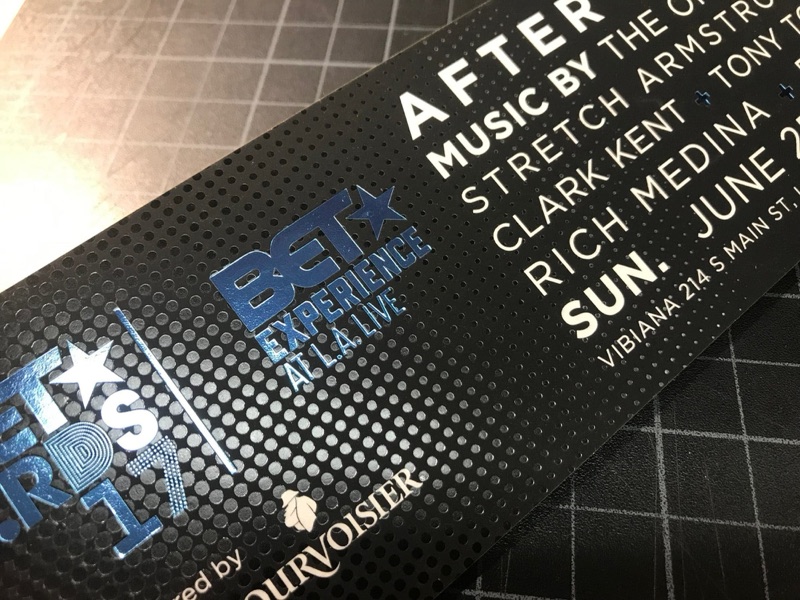
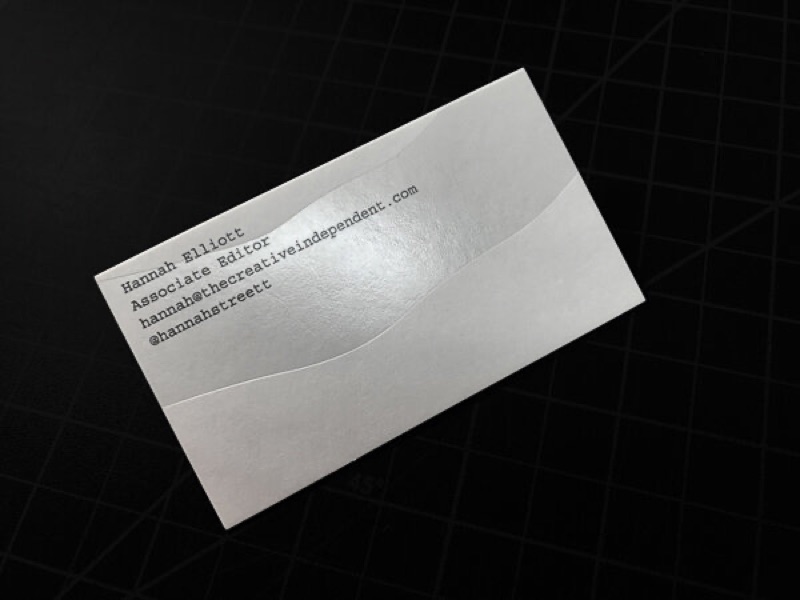
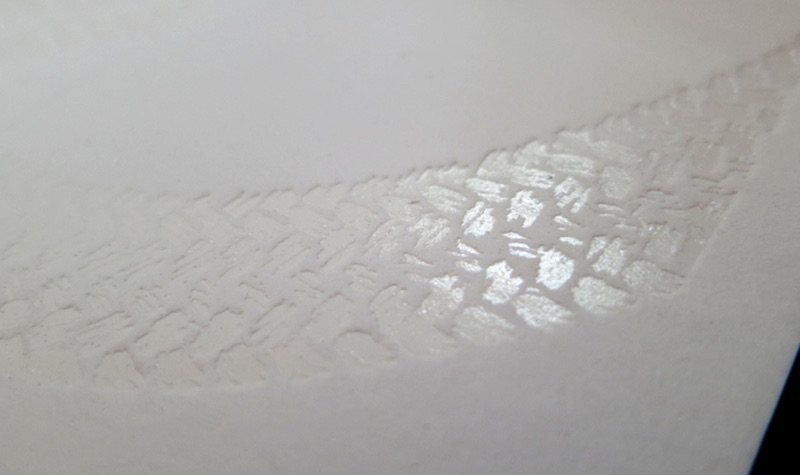
Two distinct finishes, two personalities. High-gloss clear employs a reflective surface that interacts dynamically with light, a watermark that flashes as the card tilts, turning business cards, invitations, and brochures into multi-sensory objects. Matte clear diffuses instead: a textural richness that's palpable to the touch, ideal for projects that call for subdued sophistication.
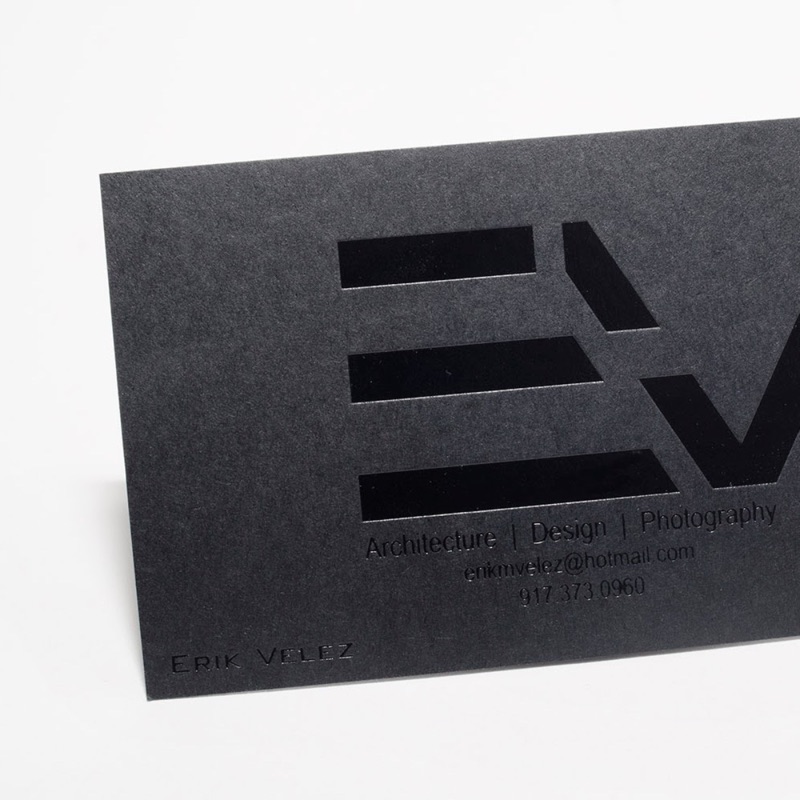
Both work as spot treatments over printed artwork or on bare stock, applied with the same heat-and-pressure precision as metallic foil stamping. A clear-foil pattern over a matte card is the quietest flex: invisible head-on, but unmistakable in hand.
Where clear foil works
- Business cards: A tonal wordmark or pattern over matte stock: the quietest flex in the shop.
- Invitations & event pieces: watermark motifs that surface as the card catches the light.
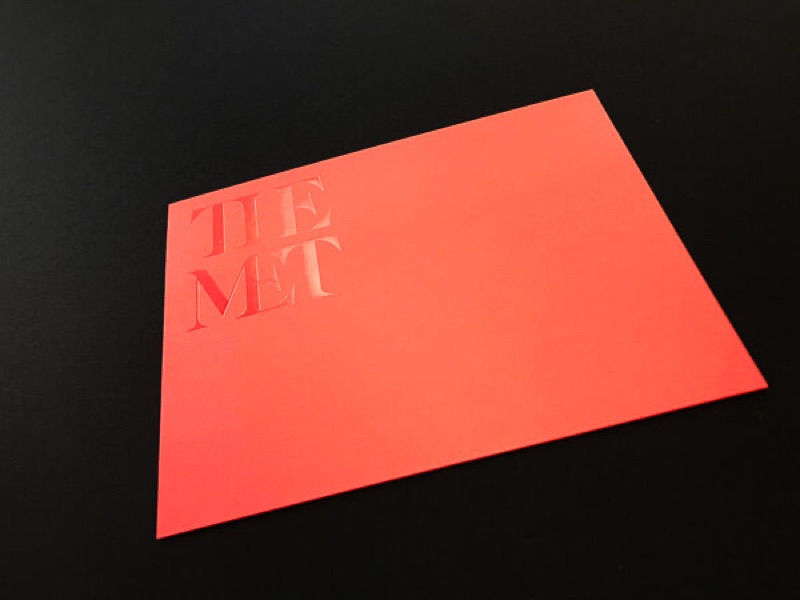
- Covers & envelopes: lookbook and brochure covers, envelope flaps that flash on open.
- Over printed artwork: a gloss layer registered over offset or letterpress art for selective depth.
Designing for it
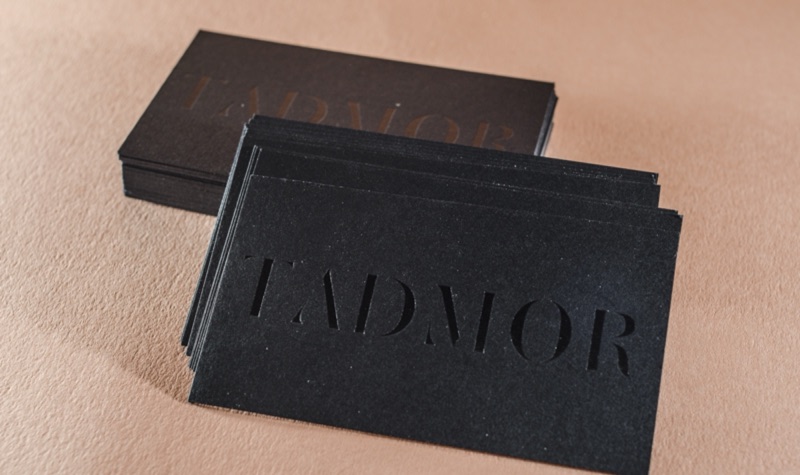
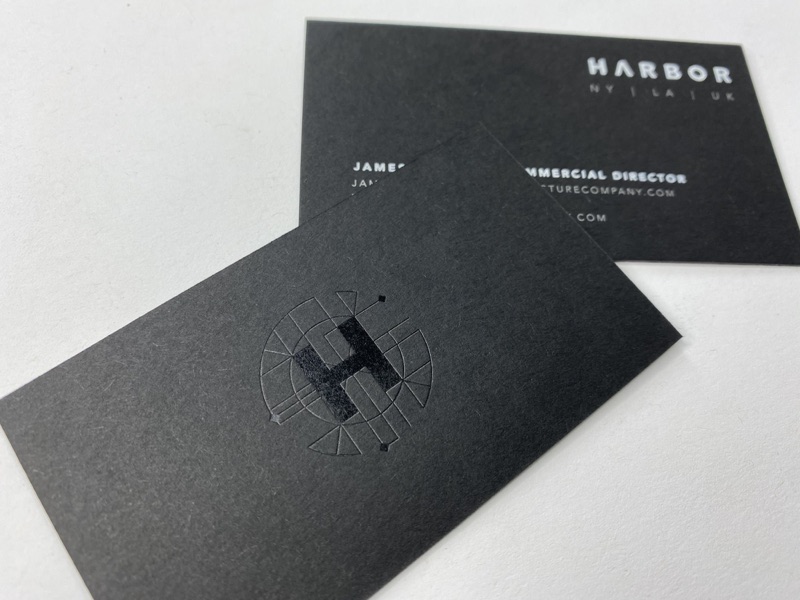
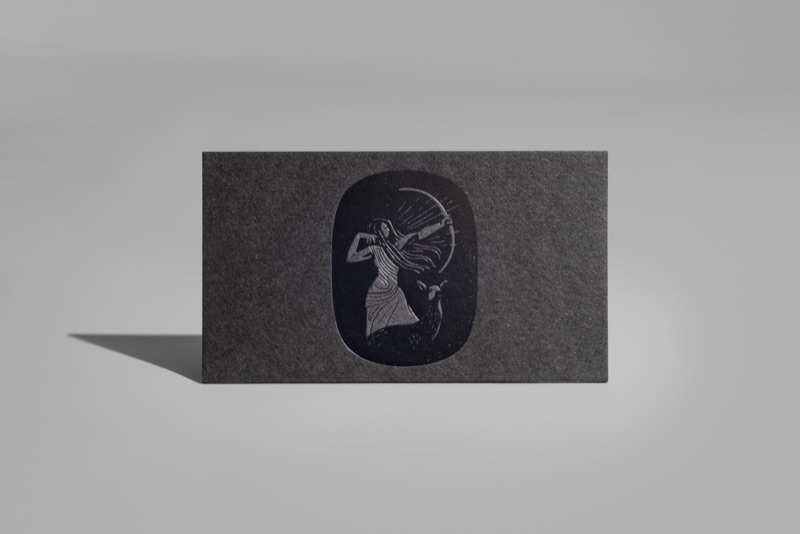
Clear foil works best with bold designs: logos, monograms, patterns, a weighty font. The design exists in the contrast between the reflection of light off the foil and the paper. Matte and uncoated stocks provide the best effects. On dark papers a gloss clear foil reads like liquid.
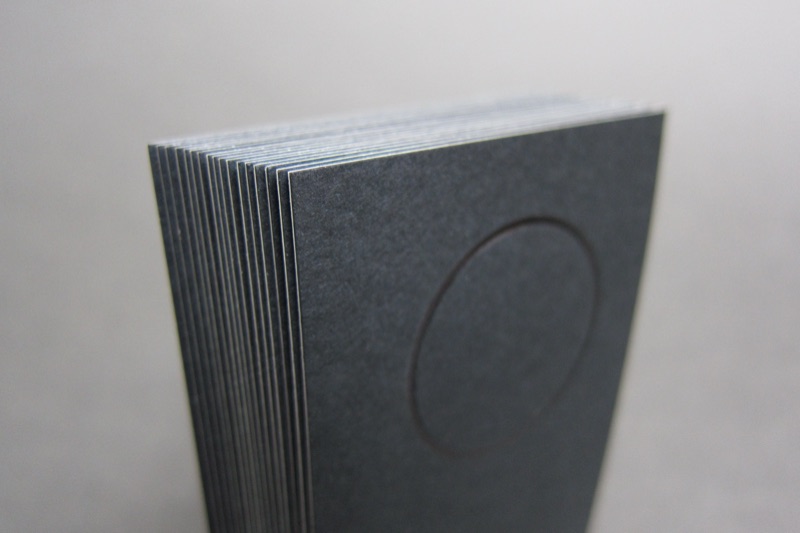
Clear foil samples
FAQ
What is clear foil?
A transparent foil applied with heat and pressure, in high-gloss or matte. It adds a watermark-like layer that appears and disappears as the piece moves in the light.
Clear foil or spot UV?
Close cousins. Clear foil is stamped, sits proud of the sheet, and holds crisper edges; spot UV is a cured varnish that's happier flooding large areas. We'll steer you to the right one.
Does it work over printed artwork?
Yes: registered over offset, letterpress, or digital art, or straight onto bare stock for the pure watermark effect.
Which stocks show it best?
Matte and uncoated sheets give the strongest contrast. On black and dark papers, gloss clear foil reads as liquid.